overload

Every square can be taken back.

Place a number, or bump a lower one off the board with a higher one. Three in a row wins — and games almost never end in a draw.

Solo or multiplayer?

tuned fair fight

Bot blocks and bumps sensibly. A real match.

quick rules

overloadtic tac toe with numbers vs a bot

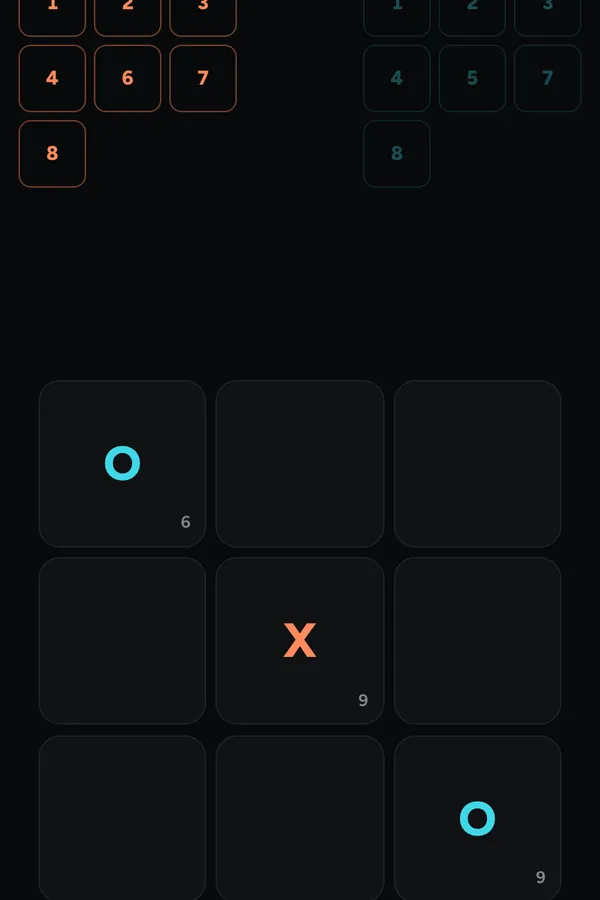
overload is tic-tac-toe on a 3x3 grid, but each player has one each of the numbers 1 to 9 to spend over the whole match. On your turn, place an unspent number on an empty square, or on a lower number, which bumps it off for good.

Three in a row wins, judged on who holds the squares right now. If nobody makes a line and neither side can move, the board is settled by best-line total, then total number value held, then squares held, then the centre.

Play a bot on loose, tuned or ruthless, or a friend by invite link in a private multiplayer room. Against the bot you move first. The bot checks for its own win only from tuned up, and only ruthless refuses moves that hand you a win.

Full rules and strategy for overload
Rules, controls, scoring & tips

about the game

Playing overload

A tic-tac-toe variant with reusable squares. Nine numbers each, spend them wisely.

Controls

  • Touch or mouse: tap one of your numbers, then tap a highlighted square.
  • Keyboard: press 1 to 9 to pick a number, Tab to a square and press Enter or Space to place it, and Escape to put the number back. Enter starts the next match from the result screen.
  • You can see the board and both hands the whole match. Squares you may take light up as soon as you pick a number, and if no number you hold is high enough, your turn passes back automatically.

Scoring

A win pays 100 minus 5 for every number your opponent still holds, multiplied by 0.7 on loose, 1 on tuned and 1.4 on ruthless. A draw pays 20 and a loss pays 0. The guide has the full breakdown.

Tips

  • Put middling numbers in the centre early and keep your 8 and 9 in hand: a 9 on the board can never be taken, but a 9 in hand can take any lower number.
  • Both hands are face up. A number of yours on the board can only be bumped by a higher one, so once the bot has spent every number above it, it is safe.
  • Bumping your own lower number spends a number and gains no new square, so do it only when that square matters more than the number.
  • A win is worth 100 minus 5 for each number the loser still holds, so the quickest possible win (your third move, the bot holding seven numbers) pays 65 before the level multiplier. A slower, grinding win pays more.
  • Against ruthless, a single threat gets blocked. Aim for two winning squares at once, and keep your 9 until the bot has spent its own, because a 9 on the board cannot be bumped.
Numbered pieces above a tic-tac-toe board where both players have placed their numbers.
Full rules and strategy for overload Play today's overload daily

questions

overload questions

How is overload different from classic tic tac toe?

Both use a 3x3 grid and three in a row wins. In overload, each player spends the numbers 1 to 9 once per match. A higher number can replace a lower one, so a square can change hands. A 9 cannot be bumped.

What if I have no number high enough to play?

Your turn passes. The match ends when someone makes three in a row or neither side can move, so a player holding only low numbers can be passed over repeatedly.

What happens if nobody makes three in a row?

The board is settled in order: the higher total on a side's best line wins, then the higher total of all the numbers it holds, then the most squares held, then the centre square. That is why draws are rare.

Can I bump my own number?

Yes. A higher number may replace any lower one, yours included. It spends a number without taking anything from your opponent, so it only helps when the square matters more than the number.

Who moves first, and does it matter?

You move first against the bot. In a private room the host's seat moves first. Moving first lets you reach a line in three moves, but a higher number can take a square held by a lower one. A 9 cannot be bumped.

How is the score worked out?

Win score = (100 - 5 x the numbers your opponent still holds) x 0.7, 1 or 1.4 for loose, tuned or ruthless. A draw is 20 and a loss is 0. The ceilings are 70, 100 and 140, and a win on your third move is worth 46, 65 or 91.

How do the three bot levels actually differ?

Loose never checks for its own winning move, looks for a block 25 percent of the time and plays a random legal move 40 percent of the time. Tuned checks for wins, looks for blocks 90 percent of the time and plays randomly 12 percent. Ruthless always checks, always blocks when it can, and refuses moves that hand you a win.

Can I play overload with friends?

Yes. Choose Multiplayer to get an invite link for a live duel or play-by-turns (24 hours a turn), and your friend joins the match from their own browser. Ready up, then the host starts. Private rooms have their own standings and do not use a solo daily attempt.

Is there a daily overload challenge?

Yes. Today's run seeds the bot's random choices from the UTC day, so every player on a level faces the same stream of them. Your first match on each level is scored and later ones are practice.